
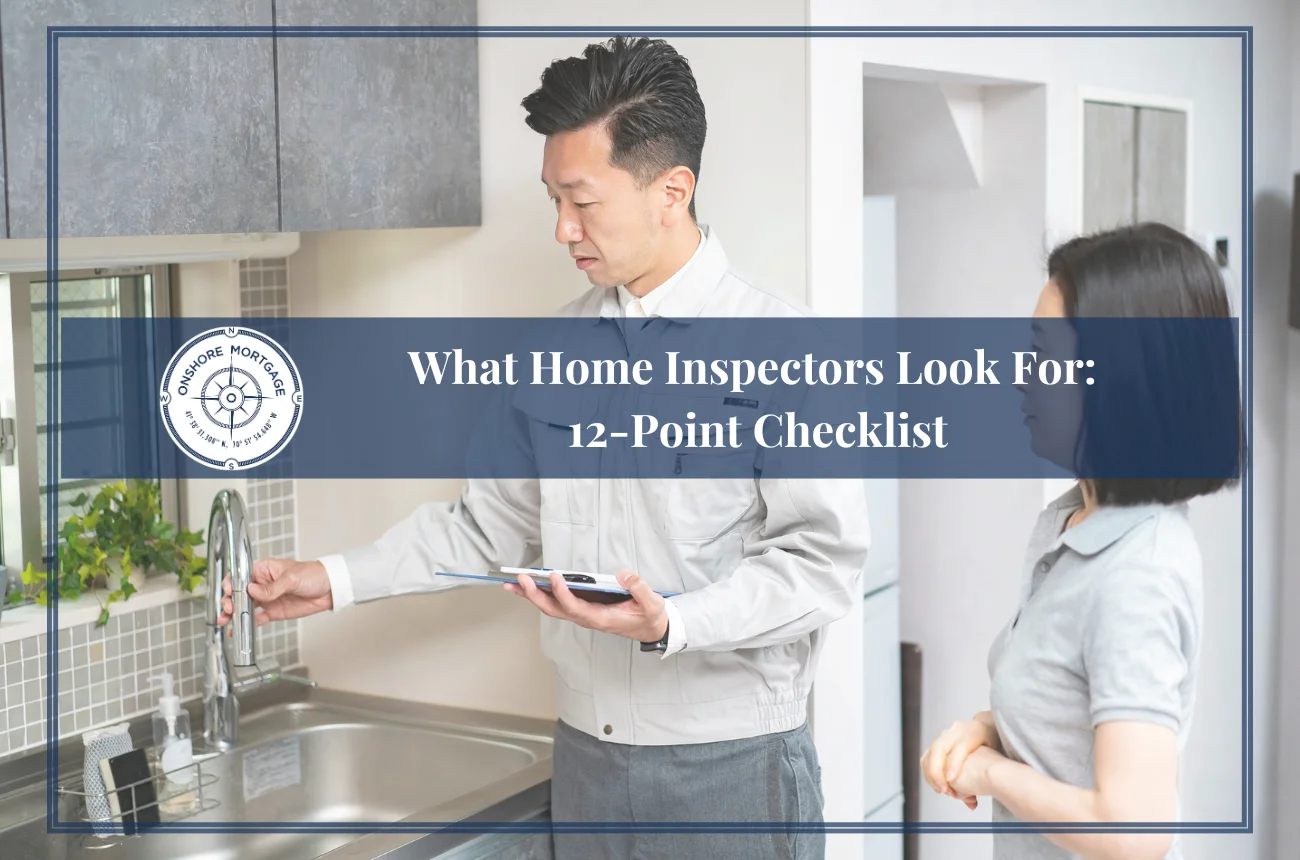
What Home Inspectors Look For: 12‑Point Checklist
Our 12‑point home inspection checklist reveals what inspectors look for; from foundation and roof to systems and safety. Learn to budget and negotiate repairs.
This guide was created in collaboration with a licensed home inspector and mortgage specialists. It is designed to help you understand what professional inspectors look for and how the findings can affect your purchase and financing decisions. While every home is unique, this checklist covers the critical systems and components typically examined during a standard home inspection.
Why home inspections matter
A home inspection isn’t a test you pass or fail; it’s an opportunity to uncover hidden home issues before closing on a property. A professional inspector will evaluate the visible systems and structure of a house and provides a written report detailing any defects. This report helps you:
- Understand safety or structural issues that could cost thousands of dollars to repair.
- Budget for upcoming maintenance and factor those costs into your mortgage and insurance decisions.
- Negotiate repairs or price reductions with the seller.
- Decide whether to proceed with the purchase or walk away.
Keep in mind that inspectors are generalists. If a major problem is found, like foundation movement or an outdated electrical panel, specialists (structural engineers, electricians, etc.) may need to be consulted for further evaluation. Obtaining a home inspection is an important part of the purchase process.
Structural integrity and foundation
A home’s foundation supports everything above it. Inspectors walk the perimeter of the house and, if accessible, crawl spaces or basements to look for cracks, settlement or moisture intrusion. Here’s what they assess:
- Cracks and settlement: Hairline cracks in concrete slabs are common, but horizontal or “stair‑step” cracks in block or brick can indicate serious structural movement.
- Water intrusion: Signs of efflorescence (white, chalky residue), damp walls or mildew suggest water pressure against the foundation.
- Bowed or leaning walls: Outward pressure from soil can cause foundation walls to bow or tilt, requiring immediate attention.
- Pro tip: Request detailed photos and measurements of any cracks. For major concerns, hire a structural engineer for a separate evaluation and use the findings during negotiations.
Roof condition and attic ventilation
The roof is your home’s first line of defence against the elements. Roof repairs or replacements can be costly, so inspectors pay close attention to:
- Missing or damaged shingles/tiles: Inspectors note cracked, curled or missing roofing materials.
- Flashing and seals: Proper flashing around chimneys, skylights and vents prevents leaks.
- Signs of leaks in the attic: Inspectors look for water stains, mold or rotten wood in the attic space. Poor ventilation can also lead to moisture problems.
- Age and remaining lifespan: Asphalt shingles typically last 15–25 years; inspectors may estimate how many years remain.
- Pro tip: Ask your home inspector whether multiple layers of roofing are present. Adding a new roof over an existing one can hide damage and add excessive weight.
Plumbing systems
Leaks and plumbing failures can lead to extensive damage. Inspectors focus on:
- Supply and drain pipes: Look for signs of leaks, corrosion or outdated materials (e.g., galvanized pipes prone to corrosion). They’ll run faucets and flush toilets to check water pressure and drainage.
- Under‑sink connections: Signs of active leaks, rust or water stains in cabinets indicate issues.
- Water heater and shut‑off valves: Inspectors check the condition, age and safety relief valve of the water heater, and confirm that shut‑off valves are functional.
- Pro tip: If the home has a sump pump, ask the inspector to test it. A malfunctioning pump can lead to basement flooding.
Electrical systems and safety
Faulty wiring is a major cause of house fires. Inspectors evaluate the entire electrical system:
- Service panel: They check for proper grounding, labeling and signs of overloading (double‑tapped breakers or melted insulation).
- Outlets and switches: Inspectors test that outlets work, are wired correctly and have GFCI protection in kitchens, bathrooms and outdoors..
- Visible wiring: Look for signs of DIY or unprofessional work, open junction boxes, and outdated knob‑and‑tube or aluminum wiring.
- Pro tip: If the inspection reveals a Federal Pacific or Zinsco panel (known for safety issues), budget for a full replacement.
Heating, cooling and ventilation (HVAC)
A functioning HVAC system keeps your home comfortable and energy efficient. Replacing a furnace or air conditioner can cost $3,000–$15,000. Inspectors will:
- Test the furnace and air conditioner: They turn on the systems and let them run to ensure proper operation.
- Check age and maintenance: Ask the seller for maintenance records and the unit’s age. A system older than 15 years may need replacement soon.
- Inspect ductwork and filters: Poorly sealed ducts or clogged filters reduce efficiency.
- Pro tip: In cold climates, some inspectors use thermal cameras to identify heat loss and insulation gaps. Ask if this service is available.
Walls, ceilings and interior finishes
Inside the home, inspectors look beyond fresh paint to spot hidden problems:
- Stains and discoloration: Water stains or bubbling paint can signal roof or plumbing leaks.
- Cracks: Small hairline cracks are often cosmetic, but large or widening cracks may indicate structural movement.
- Cabinets and fixtures: Inspect built‑in cabinets for missing hardware and doors that don’t close properly.
Doors, windows and openings
Properly functioning doors and windows are essential for security and energy efficiency. Inspectors will:
- Check operation: Ensure doors and windows open and close smoothly and latch correctly.
- Look for rot or damage: Wooden frames should be free of rot, mold or insect damage.
- Verify seals: Check for drafts or failed seals in double‑pane windows.
- Pro tip: Older windows may be less efficient. Factor replacement costs into your renovation budget.
Floors, stairs and railings
Uneven floors or loose railings can signal structural issues or safety hazards. Inspectors will:
- Assess flooring condition: Soft spots in hardwood, sagging floors or cracked tiles can indicate moisture problems or structural concerns.
- Inspect stairs and railings: Handrails should be secure and stairs should have consistent rise and run. Loose or missing railings are safety issues that may violate building codes.
Appliances included in the sale
If appliances convey with the home, have the inspector test them:
- Kitchen appliances: Stove, oven, dishwasher and built‑in microwaves should function and be free of leaks.
- Laundry machines: Run a short cycle to check for leaks or drainage issues.
- Pro tip: Request manuals and receipts for appliances to verify age and warranty status.
Attics, basements and crawl spaces
These hidden areas reveal the true condition of a home:
- Attic: Inspectors look for adequate insulation, proper ventilation and signs of moisture or pests.
- Basement or crawl space: They check for water intrusion, foundation cracks, efflorescence and musty odors. Sagging beams or posts may indicate structural problems.
- Pro tip: Make sure all areas are accessible. Blocked or locked spaces should raise red flags.
Safety & code compliance
Some safety features are required by law and can affect financing:
- Smoke and carbon monoxide detectors: Ensure they are installed and functioning.
- Handrails and guardrails: Stairs and elevated surfaces must have secure railings.
- Egress windows: Bedrooms, especially in basements, need appropriately sized windows for emergency exit..
- Pro tip: Discuss any code‑compliance issues with your inspector. FHA and VA loans may require repairs before closing.
Exterior and grounds
The condition of exterior elements protects your investment:
- Siding and trim: Inspectors look for peeling paint, rot, warping or cracks.
- Gutters and drainage: Water should flow away from the foundation. Clogged gutters and poor grading cause moisture problems.
- Walkways, driveways and patios: Look for cracks, uneven surfaces or trip hazards.
- Vegetation: Overhanging tree limbs can damage roofs and provide access for pests. Roots near the foundation may cause structural issues.
Beyond the basics: specialised inspections
A standard home inspection is visual and non‑invasive. Depending on the property’s age and location, you may need additional tests:
- Radon testing: Radon is an odorless gas linked to lung cancer; high levels require mitigation.
- Termite and pest inspection: Essential in regions where wood‑destroying insects are common. Typically this is required on a VA Loan.
- Mold or air‑quality testing: Recommended if the home smells musty or has a history of water damage.
- Sewer scope: A camera inspection of underground sewer lines can reveal blockages or tree‑root damage.
- Fireplace and chimney inspection: Inspectors may recommend a chimney sweep to check for creosote buildup or structural issues.
After the inspection: next steps
- Review the report thoroughly. Discuss major findings with your inspector and real‑estate agent. Focus on safety issues, structural concerns and expensive repairs.
- Get repair estimates. Obtain quotes from licensed contractors for major issues. Use these estimates to negotiate with the seller.
- Consult your mortgage professional. Some repairs may be required by lenders or affect your ability to secure financing. Onshore Mortgage can help you understand how inspection findings impact you mortgage loan options.
- Decide whether to proceed. If significant problems exist, you can request repairs, negotiate a price reduction, or walk away during the inspection contingency period.
Final thoughts
A thorough home inspection empowers you to make an informed decision about one of life’s biggest investments. By understanding what inspectors look for and how to address issues, you’ll be better prepared to negotiate repairs, plan your budget and choose the right mortgage product. If you’re ready to take the next step in your home‑buying journey, contact our team at Onshore Mortgage. We’ll guide you through the financing process and help you achieve peace of mind as you purchase your new home.

Latest Posts




.webp)
Grant R. Menard MLO NMLS# 17308

CLICK HERE
Onshore Mortgage

Massachusetts Division of Banks NMLS#MB1995582
CLICK HERE
The information contained in this site has been prepared by an independent third party and is distributed for educational purposes only. This is designed to give helpful tips on the mortgage process and is not intended to give legal advice.
Information is considered reliable but not guaranteed. This is not a pre-qualification, pre-approval, loan approval or commitment to lend. We arrange but do not make loans.